
More
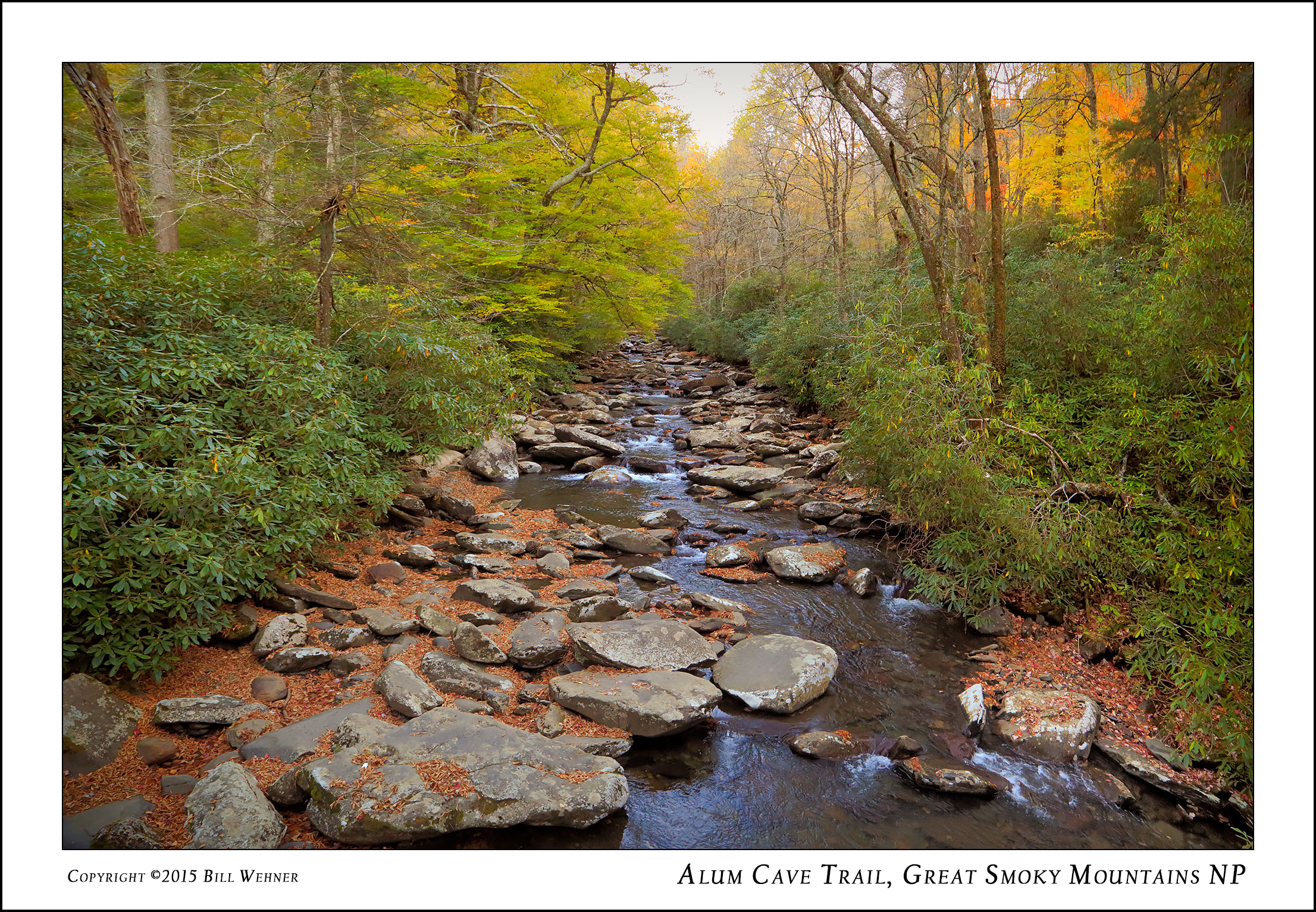
The US National Park Service recently released 2025 visitation numbers for each of the national parks with Great Smoky Mountains National Park coming top by more than twice the second place park (Zion).
The top five were:
- Great Smoky Mountains National Park, Tennessee and North Carolina (11.5 million visitors)
- Zion National Park, Utah (4.9 million)
- Yellowstone National Park, Wyoming (4.7 million)
- Grand Canyon National Park, Arizona (4.4 million)
- Yosemite National Park, California (4.2 million)
Less
At the other end of the spectrum, Kobuk Valley National Park came bottom.
That isn’t terribly surprising. It’s a wilderness park in a remote part of northwestern Alaska with no trails, roads, or other infrastructure. In fact, four of the five least visited parks are in Alaska.

The bottom five parks were:
- Kobuk Valley National Park, Alaska (7,786 visitors)
- Gates of the Arctic National Park, Alaska (14,923)
- Lake Clark National Park, Alaska (19,778)
- Isle Royale National Park, Michigan (29,091)
- Katmai National Park, Alaska (34,479)
Numbers Do Lie
Seeing counts precise to the last digit raises an eyebrow (was Kobuk exactly 7,786 visitors?). Even the official park service numbers for the high visitation parks go to the last digit (Great Smoky Mountains’ official count is 11,527,939). As an engineering professor of mine once said “precision and accuracy are not the same”.
That led me to investigate how the numbers are determined. Unsurprisingly, it’s difficult.
It turns out that virtually all national park units have their own way of determining numbers that can include automatic traffic counters, number of vehicles multiplied by a person-per-vehicle factor, aerial surveys of boat traffic, ferry tickets, and manual counts by park service personnel.
Many parks have pass-through roadways used by people getting to and from points outside of the park. Should these transits count as visitations (looking at you, Great Smoky Mountains)?
For a remote park like Kobuk, getting accurate numbers is even more challenging. Primary access for visitors is via bush plane from the frontier towns of Bettles or Kotzebue. The park service requires air taxi services landing in the park (mainly on the dunes) to report passenger numbers, but it also counts boat traffic on the Kobuk river. In the latter case, traffic is generally locals moving up and down river, for example between the villages of Ambler and Kiana, both outside the park boundary. Once again, should this pass-through traffic count as visitation?
In any case, we should take the totals for what they are: rough estimates which are useful for planning purposes but do little to suggest the visitor experience. Consider that Gates of the Arctic with its 0.015 million visitors is roughly 17 times larger than Great Smoky Mountains with its 11.5 million, so on a visitors-per-acre basis, your chances of encountering another human in Gates of the Arctic are roughly zero. Good luck with that in most parks.
An Anecdote
In September of 2025, my wife and I got a drop off on the dune field in Kobuk valley with 130 pounds of food and gear. For three days we hiked the dunes and adjacent spruce forest before inflating pack rafts and paddling four days through the western part of the park on the Kobuk river. We never saw another human while on the dunes. Ditto on our first full day on the river. [Later we met a few villager’s boats moving up and down stream or fishing as we approached Kiana. Total human count? Less than ten.]
To put that in perspective and keeping in mind that the dune field is the park’s centerpiece, try to imagine going to Old Faithful in Yellowstone for three days without seeing a soul.
Less Is More
I guess at bottom this post is an ode to the least visited parks.
I’ve found something to love about all of the national parks, and one thing I love is the option to escape, seek solitude, and have a very personal encounter with the natural world. If that sound good, then these remote, least visited, parks (and the rest of the world’s wilderness) may be for you.
One response to “More or Less”
This is such a great breakdown of the numbers behind our National Parks! It’s easy to look at the “Top 5” vs. the “Bottom 5” and see a simple list of popularity, but your post does a great job of highlighting the nuance in how we actually quantify “visitation” and the factors that might effect that.
It’s fascinating how much variance there is in the counting methodology. It really makes you appreciate the logistical gymnastics the NPS performs, especially in parks like Great Smoky Mountains. With major through-put roads and multiple entry points without formal gates, the distinction between a “visitor” and a “commuter” becomes a complex calculation. Each park’s unique geography creates such specific data challenges, proving that these stats are often as much an art as they are a science.
While the “Big 5” get the lion’s share of the headlines, there is something truly sacred about the solitude found in the less-trodden units. Seeking out those “bottom of the list” parks feels like finding a well-kept secret. That quietude is a treasure, and I’m so grateful that the system is designed to protect both the bustling icons and the silent, remote corners.
Huge thanks to the rangers, staff, and volunteers who maintain these spaces and navigate the complexities of managing such diverse landscapes. I also want to thank photographers and enthusiasts like yourself—by capturing and sharing these sometimes missed aspects of the lesser-known parks, you help us all see the value in the spaces that don’t always make the evening news. We are so lucky to have this system!